CPT code 90837 is the code for individual psychotherapy lasting about an hour. Under standard CPT time rules, you can report it when you spend 53 minutes or more in psychotherapy with the patient (a family member may also take part, as long as the patient is present for at least part of the session). Shorter sessions move down to 90834 (38–52 minutes) or 90832 (16–37 minutes).
The rest of this guide covers how the time threshold works, what to document, how 90837 compares to 90834, which add-on codes may apply, how telehealth changes the claim, and how to put 90837 on a superbill your client can submit for out-of-network reimbursement.
What is the 90837 CPT code?
90837 is one of three time-based codes for individual psychotherapy that is not paired with a medical evaluation and management (E/M) visit. In plain words, it describes a psychotherapy session of roughly 60 minutes with the patient, where a family member may also participate.
It is used by licensed clinicians whose scope of practice includes psychotherapy, such as psychologists, clinical social workers, professional counselors, marriage and family therapists, psychiatric nurse practitioners and psychiatrists. Whether a particular license type can bill a particular payer depends on that payer’s credentialing rules and your state’s scope-of-practice laws.
A few things 90837 is not:
- Not a family therapy code. Family psychotherapy has its own codes (90846 without the patient present, 90847 with the patient present).
- Not a group code. Group psychotherapy is 90853.
- Not a crisis code. Psychotherapy for crisis uses 90839 and its add-on 90840.
- Not for psychotherapy done during an E/M visit. Prescribers who also provide a medical visit in the same encounter report an E/M code plus a psychotherapy add-on (90833, 90836 or 90838) instead.
What are the 90837 time requirements?
The individual psychotherapy codes are defined by time, and the CPT time rule says a unit of time is reached once the midpoint is passed. That is where the commonly used ranges come from:
| CPT code | Typical session label | Psychotherapy time to report it |
|---|---|---|
| 90832 | 30 minutes | 16–37 minutes |
| 90834 | 45 minutes | 38–52 minutes |
| 90837 | 60 minutes | 53 minutes or more |
Fewer than 16 minutes of psychotherapy generally is not reportable with these codes.
What time counts toward the 53 minutes?
Count the time you are actually providing psychotherapy to the patient, or to the patient and a family member. Time that usually does not count:
- Writing progress notes after the client leaves
- Scheduling, billing or collecting payment
- Waiting for a client who joins a video session late
- Calls with other providers outside the session
If a session runs 50 minutes because the client arrived 10 minutes late, it is a 90834 session, even though it was booked as an hour.
Is there a maximum time for 90837?
The 90837 range has no upper limit; it covers 53 minutes and up. For sessions that run well past an hour, some payers recognize a prolonged-service add-on code. Which prolonged-service code applies, and whether a payer covers it at all, has changed with CPT updates and varies by payer. Confirm with the payer and the current CPT code set before adding one, and document why the extended time was clinically necessary.

How should you document a 90837 session?
Time-based codes depend on documentation. If a payer reviews a 90837 claim, the reviewer will look for proof that you met the 53-minute threshold and that an hour of therapy was medically necessary.
Good practice for every 90837 note:
- Record start and stop times (for example, 10:02–11:00) rather than only “60 min.” Some payers, including some Medicaid plans, specifically require start and stop times; others accept total time. Start and stop times satisfy both.
- Name the modality and interventions used (for example CBT, EMDR, DBT skills or exposure work) and how the client responded.
- Tie the session to the treatment plan and the diagnosis you are billing.
- Explain why the longer session is needed if you bill 90837 routinely. Trauma processing, complex presentations or an acute phase of treatment are examples clinicians commonly document. Write the reason in your own clinical words rather than copying the same sentence into every note.
- Note who attended if a family member joined, and that the patient was present for at least part of the session.
- For telehealth, note the modality (video or audio-only), the client’s location and consent, following your payer’s and state’s rules.
90837 vs 90834: which should you bill?
Bill the code that matches the psychotherapy time you actually documented, not the time you scheduled.
| Situation | Code |
|---|---|
| Booked an hour, session ran 55 minutes | 90837 |
| Booked an hour, client 15 minutes late, session ran 45 minutes | 90834 |
| Standard “50-minute hour” session | 90834 |
| Documented 1:00–1:53 | 90837 |
| Booked 45 minutes, ran to 58 minutes, documented | 90837 |
The most common mistake is billing the scheduled length instead of the delivered length. A 50-minute “therapeutic hour” is still a 90834 session. If you want to bill 90837, your schedule has to allow sessions that actually reach 53 minutes or more.
For a closer look at the 45-minute code, see our guide to CPT code 90834.
Which add-on codes can be used with 90837?
90785: interactive complexity
90785 is an add-on for interactive complexity. It can be reported with 90837 when specific factors make communication during the session harder, such as managing heated or disruptive communication between participants, a caregiver whose emotions or behavior interfere with treatment, a sentinel event that leads to a mandated report, or using play equipment or other tools with a patient who cannot communicate at an adult level. Interpretation or translation alone does not qualify. Document the specific factor each time you use it.
Prolonged services
As noted above, some payers allow a prolonged-service add-on for psychotherapy that runs substantially beyond an hour. Rules vary, so verify coverage and the correct code first.
What you can’t combine with 90837
- 90834 or 90832 for the same session. Pick one.
- 90833, 90836 or 90838. These add-ons only go with an E/M visit. If a prescriber provides an E/M visit plus 53 or more minutes of psychotherapy, the pairing is the E/M code plus 90838, not 90837.
- 90791 on the same day by the same provider is generally not allowed. See CPT code 90791 for intake billing.

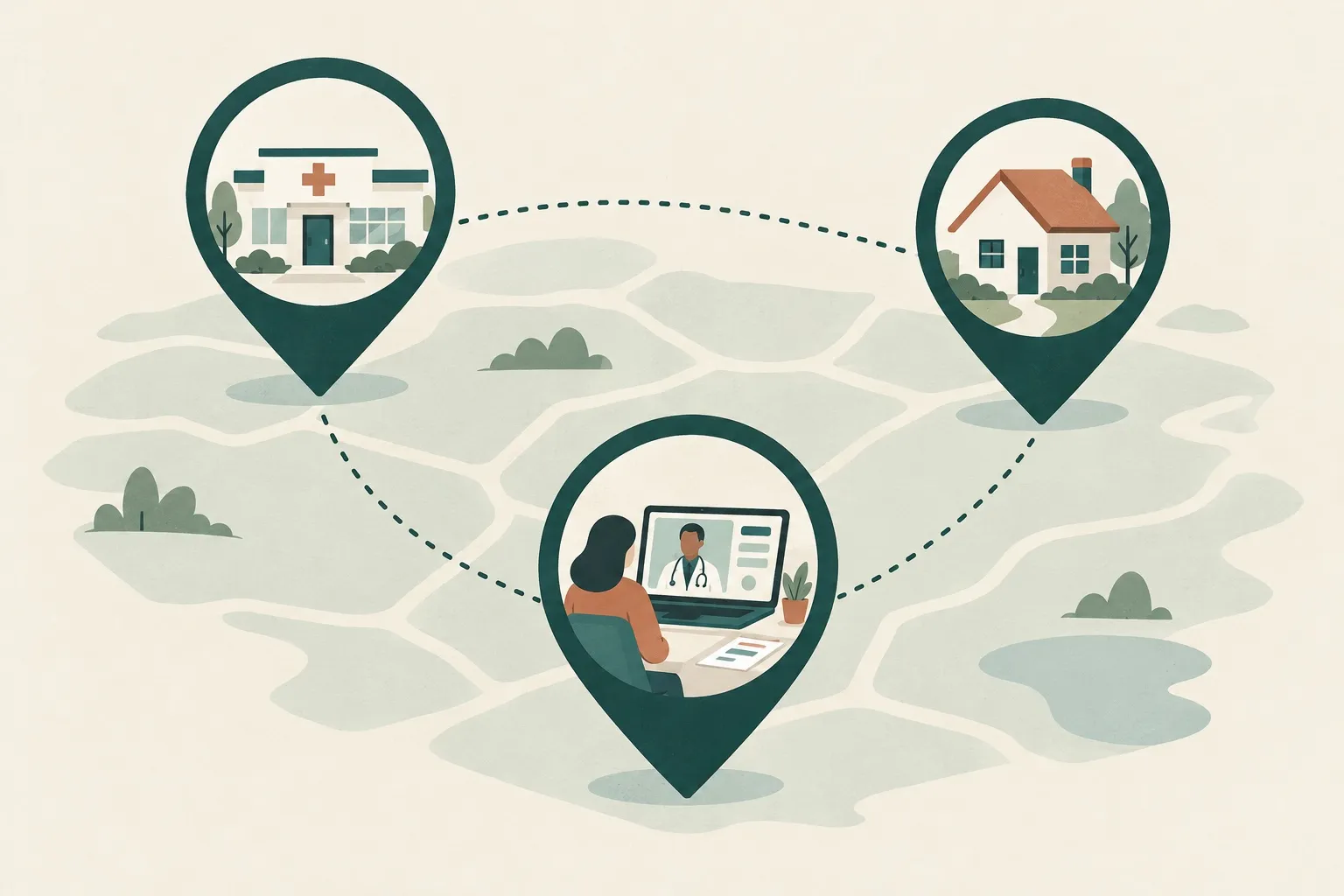
How do you bill 90837 for telehealth?
90837 is widely covered for telehealth, but claim details differ by payer:
- Place of service. Many payers want POS 10 when the patient is at home and POS 02 when the patient is somewhere other than home. Some commercial payers instead ask for the POS you would use in person (often 11) plus a modifier. See our guide to place of service codes for telehealth.
- Modifiers. Modifier 95 (real-time audio and video) is common. Some payers still use GT. Some payers use modifier 93 for audio-only services. Rules on these modifiers have changed several times since 2020, so check each payer’s current telehealth policy and current CMS guidance rather than relying on last year’s rules.
- Audio-only. Some payers cover audio-only psychotherapy and some do not. When they do, they may require documentation of why video was not used.
When the session is going through a client’s out-of-network benefits, the superbill should show the same POS and modifier the payer would expect on an in-network claim. That is the most reliable way to avoid a “missing or invalid information” denial.
How do you put 90837 on a superbill?
A superbill is an itemized statement your client submits to their insurer for reimbursement. If you are new to them, start with what a superbill is. Each 90837 session gets its own service line.
Example service line for a video session with the client at home (fictional data):
| Date | CPT | Mod | POS | Dx pointer | Units | Fee |
|---|---|---|---|---|---|---|
| 10/14/2026 | 90837 | 95 | 10 | A | 1 | Your full fee |
With a diagnosis list such as:
- A — F41.1 (generalized anxiety disorder)
- B — F33.1 (major depressive disorder, recurrent, moderate)
The provider block carries your name, credentials, address, phone (for example (555) 010-0123), NPI (for example 1234567893) and EIN (for example 12-3456789). The client block carries name, date of birth, insurance carrier, member ID and group number.
Superbill tips specific to 90837:
- Units are 1. 90837 is reported once per session, not per 15 minutes.
- Show your full fee, then the amount paid and balance. The insurer decides the allowed amount, so do not pre-discount the charge on the line.
- Point every line to a diagnosis. A service line without a diagnosis pointer is a common reason out-of-network claims come back.
Our free superbill generator has a service-line row with all of these columns, letters your diagnoses A–L automatically, checks the NPI check digit, and flags fields insurers usually require before you print. The therapist template comes preloaded with common psychotherapy codes, including 90837, so you pick codes instead of typing them.
What are common 90837 denials and audit triggers?
90837 tends to get more scrutiny than the shorter psychotherapy codes because it is typically paid at a higher rate than they are. Some payers have run utilization review programs aimed specifically at frequent 90837 billing. Typical problems include:
- Time not documented, or documented as under 53 minutes. This is the biggest single risk.
- Every session billed as 90837 with no variation or justification in the notes. Billing patterns that look identical across all clients can prompt review.
- Missing or mismatched telehealth POS or modifier.
- A diagnosis that does not support ongoing psychotherapy, or no diagnosis pointer on the line.
- Billing 90837 alongside an E/M code instead of using the E/M plus 90838 pairing.
- Prior authorization required but not obtained on plans that require it.
- Provider type not eligible under that plan’s credentialing rules.
For out-of-network clients, denials usually arrive as a letter or portal message to the client. Many can be fixed by correcting the superbill and resubmitting. Our guide on how to submit a superbill to insurance walks through that process from the client’s side.
Quick checklist before you bill 90837
- Psychotherapy time was 53 minutes or more, with start and stop times in the note
- The note describes the interventions and why the session length was needed
- No conflicting code (90834, 90832, 90791 or an E/M pairing) for the same session
- Correct POS and modifier for in-person or telehealth, per the payer’s current rules
- A diagnosis pointer on every service line
- Provider NPI, Tax ID and credentials on the superbill
Create a 90837 superbill in a few minutes
If you bill 90837 for private-pay or out-of-network clients, you can build a clean, insurer-ready superbill with the free superbill generator. It runs entirely in your browser, nothing is uploaded, and you can print it or save it as a PDF. Start from the therapist superbill template to get 90837 and the other psychotherapy codes preloaded.
FAQ
How many minutes is CPT code 90837?
90837 is the 60-minute individual psychotherapy code. Under the CPT time rules most payers apply, you can report it when you spend 53 minutes or more in psychotherapy with the patient. Sessions of 38 to 52 minutes are reported with 90834 instead.
Can 90837 be billed for telehealth?
Many payers cover 90837 when it is delivered by real-time video, and some also cover audio-only sessions. The place of service code (usually 02 or 10) and any modifier (such as 95, GT or 93) depend on the payer and have changed over time, so check the payer's current telehealth policy before you bill.
Does 90837 require prior authorization?
Some payers require authorization or apply extra review to 90837, especially when it is billed often for the same patient, while many do not. Check the member's plan or call the payer's provider line before the first session if you plan to bill 90837 regularly.
Can I bill 90837 and 90834 on the same day?
Generally no. They are alternative codes for the same service, so you choose the one that matches the total psychotherapy time for that session. If a client truly has two separate sessions on the same day, payer rules vary and you should confirm before billing both.
What if my 90837 session only lasted 50 minutes?
A 50-minute session falls in the 38 to 52 minute range, so it should be reported as 90834, not 90837. Billing 90837 without at least 53 minutes of documented psychotherapy time is one of the most common reasons these claims are denied or recouped after an audit.